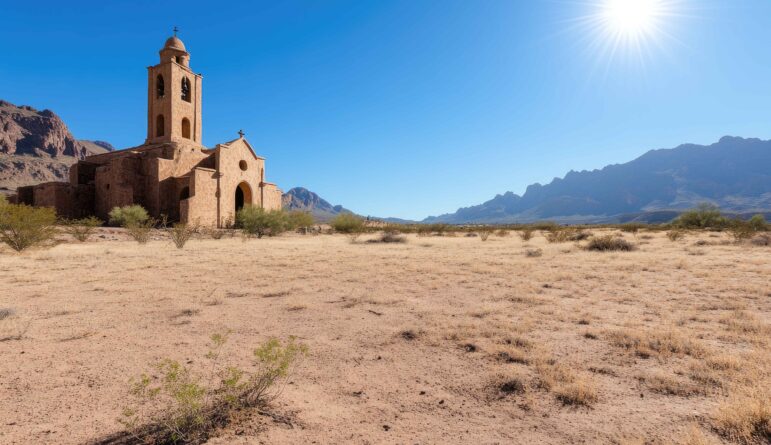
Few places in America wear their legends as boldly as Tombstone. This small desert town, tucked into Arizona’s southeastern hills, was once a magnet for miners, drifters, and dreamers. Today, it’s a living monument to the Wild West, a place where the line between history and folklore blurs under the blazing sun.
Tombstone began with a single prospector. In 1877, Ed Schieffelin searched for silver in what many warned was Apache territory. “The only stone you’ll find out there,” they said, “will be your tombstone.” The name stuck and so did the silver. His discovery sparked one of the richest mining booms in the West. Within a few years, the town grew from a cluster of tents into a thriving frontier city filled with saloons, hotels, and a rough brand of optimism.
Yet Tombstone’s prosperity came with chaos. Law was scarce, tempers short, and the sound of gunfire not uncommon. By 1881, the town’s reputation for danger was sealed forever at a certain dusty corral.
No story defines Tombstone like the legendary Gunfight at the O.K. Corral. On October 26, 1881, the Earp brothers Wyatt, Virgil, and Morgan along with Doc Holliday, faced off against a band of outlaws known as the Cowboys. The shootout lasted barely 30 seconds, but its echoes still ring more than a century later.
Today, visitors can walk the same streets where those gunmen stood. At the O.K. Corral Historic Complex, costumed reenactors relive that fateful day three times daily, complete with smoke, shouts, and the crack of gunfire. The performance borders on theater, yet it captures something raw the tension, fear, and courage that defined the frontier.
Beyond the famous gunfight, Tombstone invites exploration at a slower pace. Wooden boardwalks lead you past century-old buildings still standing from its heyday. The Bird Cage Theatre, once a raucous mix of gambling, music, and scandal, remains preserved as it was in 1889 bullet holes in the walls and all.
Stop by the Tombstone Courthouse State Historic Park to see exhibits on mining and frontier justice, or visit Boot Hill Graveyard, where outlaws, lawmen, and ordinary townsfolk lie side by side under the desert sky. Each headstone tells a story, some tragic, others darkly humorous, all part of the town’s rough past.
Modern Tombstone balances nostalgia with pride. Locals keep history alive through festivals like Helldorado Days and Wyatt Earp Days, where parades, shootouts, and period costumes transform the town into a living movie set. Yet there’s more here than theatrics. You’ll find warm hospitality in family-run inns, hearty Western fare at places like Big Nose Kate’s Saloon, and an enduring sense that you’re walking on sacred ground for American folklore.
What makes Tombstone remarkable isn’t just its legends, but its resilience. Fires destroyed the town twice. The mines ran dry. Yet Tombstone endured, rebuilt, reimagined, and remembered. It’s more than a tourist stop; it’s a testament to the stubborn spirit of the frontier.
Standing in Tombstone at dusk, as the sun bleeds into the mountains and the wooden storefronts cast long shadows, it’s easy to feel the ghosts of that bygone era. The stories here aren’t frozen in time they breathe with every creak of the boardwalk and every clang of a saloon door.Tombstone is, as it has always been, too tough to die and for travelers, that’s exactly why it’s worth the journey.